7 Heart-Healthy Foods That Lower Blood Pressure and Cholesterol
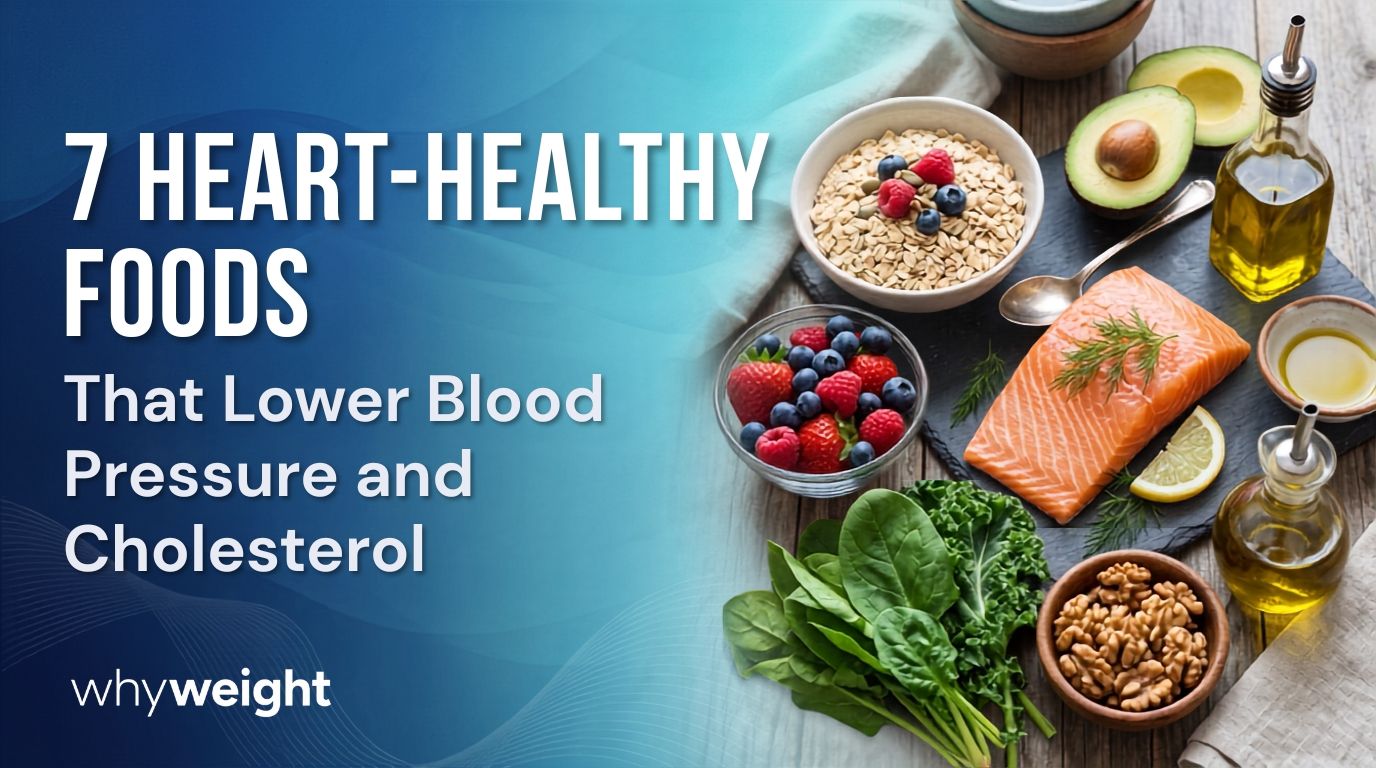
7 Heart-Healthy Foods That Lower Blood Pressure and Cholesterol at the Same Time
High blood pressure and high cholesterol usually show up together. Same person. Same problem.
The good news? The same foods fix both.
This isn't about exotic superfoods or expensive supplements. It's about heart healthy foods you can buy at any grocery store in Canada that actually work. The research backs this up. Eating the right foods can lower blood pressure by 8 to 10 points and drop cholesterol by 15 to 20 percent. That's the same impact as some medications, except food doesn't have side effects.
START FREE WEIGHT LOSS ASSESSMENT
1. Salmon
Eat it twice a week. That's the baseline.
The best heart healthy food is salmon that has omega-3 fatty acids. These aren't optional for your heart. Omega-3s reduce inflammation in your arteries. They make blood less sticky. They lower triglycerides. Your blood pressure drops as a side effect because your vessels aren't as inflamed.
How much? A 3 to 4 ounce serving, twice weekly. That's it. You don't need to eat massive amounts. Consistency matters more than quantity.
2. Oats
This one's proven. Multiple studies show oats reduce LDL cholesterol specifically, which is the bad stuff.
The mechanism is beta-glucan, a soluble fiber that binds to cholesterol in your gut and removes it before your body absorbs it. You need about 3 grams of beta-glucan daily. That's roughly a cup and a half of cooked oatmeal, or a bowl of steel-cut oats.
The blood pressure drop is secondary, but it happens. Fiber overall improves vascular function.
3. Berries
Blueberries. Strawberries. Raspberries. They all work.
These have anthocyanins, which are antioxidants that reduce inflammation. Your arteries are less inflamed. Your endothelium functions better. Blood pressure improves. LDL cholesterol drops because oxidative stress decreases. Fresh or frozen—doesn't matter. Frozen is actually better in winter because it's picked at peak ripeness.
A handful daily. Or add them to oatmeal.
4. Leafy Greens
Spinach. Kale. Swiss chard. The nitrates in these vegetables convert to nitric oxide in your bloodstream.
Nitric oxide dilates blood vessels. Dilated vessels = lower blood pressure. It's simple physiology. Potassium and magnesium also matter. Both minerals regulate blood pressure. Most people don't get enough of either from their diet.
The cholesterol benefit comes from the fiber and antioxidants. Again, less inflammation.
5. Nuts
Almonds. Walnuts. Pistachios. Not peanuts. Peanuts are legumes, not nuts, though they work too.
Nuts have unsaturated fats that improve cholesterol ratios. They raise HDL (good cholesterol) and lower LDL (bad cholesterol). They have arginine, which helps with blood vessel function. A small handful daily—about 1 ounce or 23 almonds—is the effective dose.
Don't overdo it. Nuts are calorie-dense. You're looking for heart benefits, not extra weight. Obesity and heart disease are linked, so portion control matters here.
6. Olive Oil
Extra virgin specifically. Not the refined stuff.
The polyphenols in olive oil reduce inflammation. They improve LDL cholesterol oxidation resistance, which matters because oxidized LDL is what actually damages your arteries. Regular LDL doesn't damage vessels the same way.
Use it on salads. Use it for low-heat cooking. Don't heat it to smoking point or you destroy the beneficial compounds. About 2 tablespoons daily is the research-backed amount.
7. Legumes
Beans. Lentils. Chickpeas. These are criminally underused in North American diets.
They have soluble fiber that works the same way oats do—binds cholesterol and removes it. They have plant-based protein so you don't need as much animal protein, which is high in saturated fat. They're cheap. You can buy dried beans for pennies per serving.
A cup of cooked legumes daily is ideal. Split it across meals if that works for you.
START FREE WEIGHT LOSS ASSESSMENT
The Reality About Diet Alone
Here's the honest part: foods that lower blood pressure naturally can move the needle significantly. But not always enough.
Some people have genetic factors that make their cholesterol resistant to even heart healthy foods. Some people's blood pressure is driven more by salt sensitivity or stress than by cholesterol levels. Why diet alone isn't always enough applies to heart health too.
If you're looking at a diet to reduce LDL cholesterol or managing a high blood pressure diet in Ontario, you need to know that some people don't respond to food alone. If you've changed your diet for three months and nothing's improved, you might need medication. That's not failure. That's biology.
For people with weight as a factor, losing weight helps both blood pressure and cholesterol. OHIP-covered weight loss programs focus on this because weight loss is one of the most effective interventions. Anti-inflammatory foods and weight loss strategies go hand-in-hand because inflammation drives both problems. Some people find that weight loss medications that improve heart health help them lose weight and improve their numbers simultaneously.
Weight loss service Ontario providers can assess whether you need medication, dietary changes, weight loss, or some combination. If you're looking for foods to lower cholesterol in Canada, the answer is whole foods, not packaged products.
Foods to Actually Avoid
Trans fats. Anything that says "partially hydrogenated" on the label. These increase LDL and lower HDL simultaneously. They're the worst thing you can eat.
Processed foods high in sodium. Your blood pressure responds directly to salt intake if you're sensitive to it. About 1,500 to 2,300 mg daily is the target. Most packaged foods have 500 mg per serving, which adds up fast.
Sugary drinks. Sugar increases triglycerides and promotes inflammation.
The Bottom Line
You have seven foods that work. Eat them. Consistently. For at least four weeks before expecting results.
If a diet with heart healthy foods alone doesn't work, that's when you talk to someone. Your genetics matter. Your overall health matters. Your medication list matters.
Start here. See what happens.
START FREE WEIGHT LOSS ASSESSMENT
Frequently Asked Questions
1. What foods lower blood pressure quickly?
None. Blood pressure takes weeks to shift with dietary changes. Start eating these foods consistently and expect to see results in 4 to 8 weeks. If you need results faster, medication works immediately.
2. What is the best diet to lower cholesterol naturally?
The Mediterranean diet works. Lots of fish, vegetables, whole grains, legumes. Low in processed foods and saturated fat. Research supports it consistently.
3. Can eating certain foods reverse heart disease?
No. You can't reverse existing plaque with food. You can prevent new plaque formation and slow progression. That's meaningful but different from reversal.
4. What should I eat if I have high blood pressure and high cholesterol?
The foods in this article. Focus on fish twice weekly, a daily serving of oats or legumes, daily vegetables, nuts, and olive oil. Reduce red meat, processed foods, and sugar.
5. Are heart-healthy foods the same as weight loss foods?
Mostly yes. Both benefit from whole foods, fiber, lean protein, and minimal processed ingredients. The difference is portion size and overall calorie intake. Heart health is about what you eat. Weight loss is about how much.
6. How much can diet alone lower blood pressure?
Research shows 8 to 10 points of systolic reduction for people who make significant dietary changes. Some people see more. Some see less. It depends on genetics and how strict you are.
7. What foods should I avoid if I have high cholesterol?
Anything with trans fats. Processed meats. Full-fat dairy. Saturated fat-heavy foods. Sugary foods. These all worsen cholesterol numbers. Best foods for heart health are whole foods, not packaged foods. Heart disease prevention diet Canada recommendations focus on real food.